
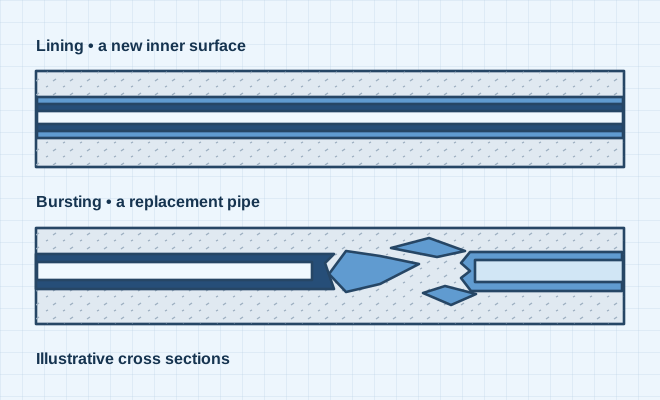
Pipe bursting vs. pipe lining
- Pipe lining
- A crew places a resin-treated liner inside the existing pipe and cures it into a hardened tube. The old pipe stays around the liner. The crew needs a route through the section being lined.
- Pipe bursting
- A bursting head travels through the old pipe, fracturing it and pulling a replacement pipe into its path. The crew needs room for the equipment and access at the ends of the run.
A low spot changes the choice
A low section of sewer can hold water even when its walls are intact. A liner follows the existing path, so lining alone leaves the low spot in place. If restoring the slope is part of the repair, ask how the crew would change the pipe’s elevation and where it would need access.
Where would the crew need to dig?
Ask the plumber to mark three things on the same sketch: the damaged section, the access points, and the space needed for equipment. If the pipe runs under a deck, for example, could the crew reach it from the lawn, or would part of the deck need to come up? For a deep line, ask how large the access pits would be. If the route crosses a public sidewalk or reaches the street, ask what city approvals and surface restoration the work would involve.
For more on evaluating the pipe, see what a camera inspection can show and the residential sewer repair overview.